Frieze London 2026: What Mattered on the Last Day
Frieze London and Masters close today in Regent's Park. A guide to the new sections, award winners and what to look for, with no sales claims we cannot source.
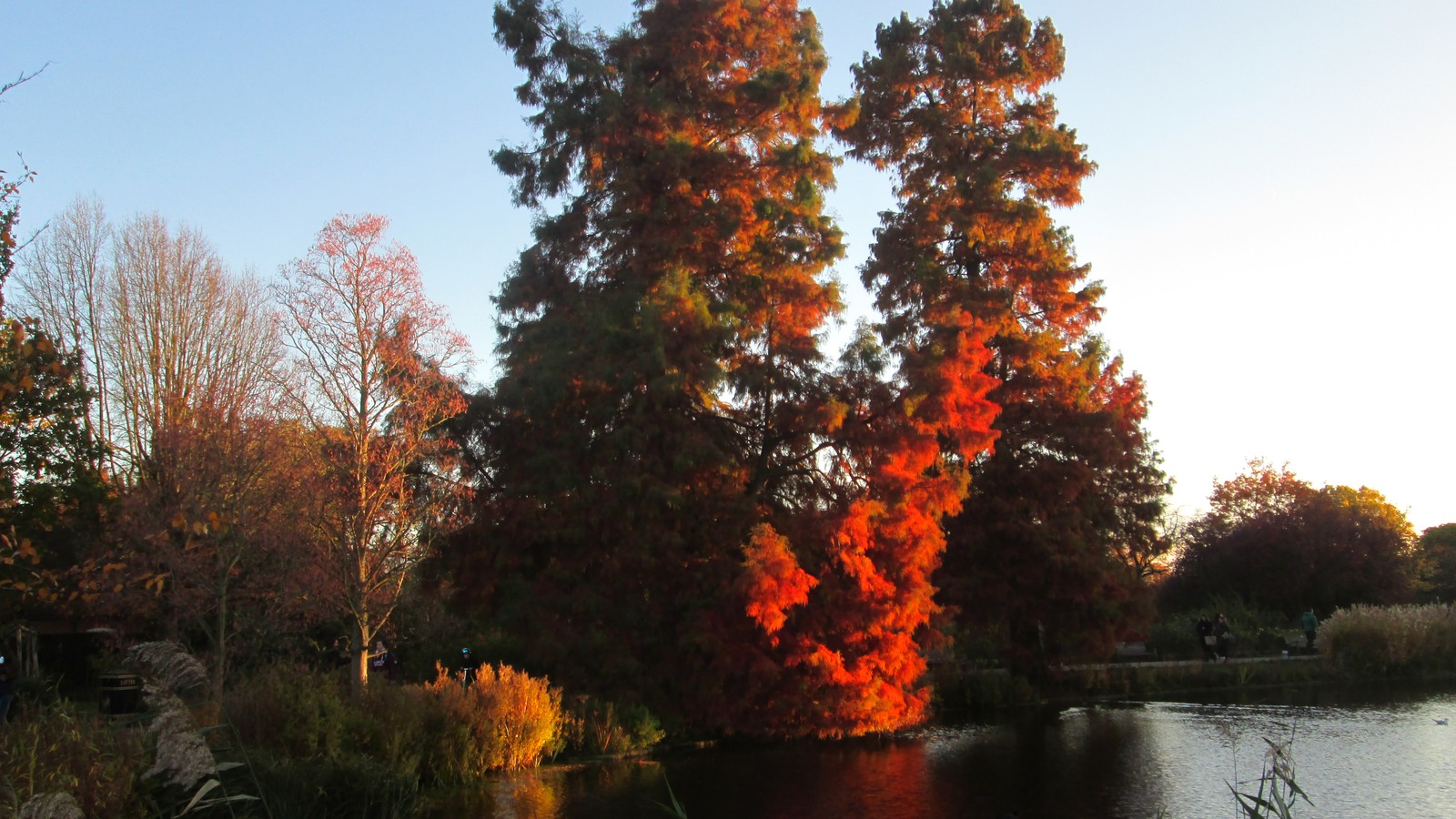
Frieze London and Frieze Masters close today, Oct. 18, after five days in The Regent's Park, with 172 galleries from 42 countries and regions in the contemporary tent and more than 140 in the historical one. For readers in New York, this is a transatlantic story, and what stands out in the programming is structure: new curated sections, a wider idea of whose history gets shown, and an installation in the fair's toilets.
Frieze London: the contemporary tent
The fair's own guide organizes the visit by section. Near the entrance, solo and dual presentations include Fortes d'Aloia & Gabriel with Marcia Falcao, Berthold Pott with Agata Ingarden, Lisson Gallery with Dalton Paula, Gagosian with new large paintings by Albert Oehlen, and Fort Gansevoort with Myrlande Constant's embroidered Haitian drapo, or Vodou flags. Richard Saltoun Gallery shows Helen Chadwick and Cathy de Monchaux, both currently in the exhibition The 90s: Art and Fashion at Tate Britain, per the guide.
Focus, supported for the fourth year by Stone Island, gathers 35 young galleries. Frieze London's campaign artist, Tamo Jugeli, is at Bukia Vakhania, where she papered a gallery stand with a William Morris print and hung five new paintings. Artist-to-Artist, in its fourth year and supported by Tiffany & Co., has seven artists each nominated by a peer, among them Jorge Gonzalez Santos (nominated by Gala Porras-Kim), Jota Mombaca (nominated by Otobong Nkanga) and Unathi Mkonto (nominated by Yinka Shonibare).
The Code Universe is new for 2026. Curated by Carol Yinghua Lu, it shows eight artists across nine galleries, from the late 1970s to now, who explore how popular culture is made, circulated and consumed, "from Shanghai to New York City," in Frieze's description.
The award winners
The Frieze Artist Award went to Theo Triantafyllidis for Feral Metaverse (Spider), a climbable physical sculpture that serves as an entry to a shared digital environment where players must cooperate to form temporary group bodies. It was produced for the first time with Google Arts & Culture and co-commissioned with Forma.
The Camden Art Centre Emerging Artist Award, announced Oct. 14, went to Ella Fleck, shown by Ehrlich Steinberg of Los Angeles in Focus. Her installation training material (aria) grew from research in which she trained as a "chatter" in an agency that manages subscriber messages for OnlyFans creators. The jury said it makes public "the usually hidden architectures and technologies of online desire and commerce." Fleck gets her first institutional solo show at Camden Art Centre.
A strange commission
Gray Wielebinski and Dean's Bottom made Production, a site-specific commission that turns the fair's public toilets into what Frieze calls "an intimate olfactory experience," using scented sculptural objects to explore risk, desire, security and social behavior. Whether you find that clever or silly, it is the sort of project that shows how the fair now thinks about programming.
Frieze Masters: the long view
Frieze Masters runs history from antiquity to the late 20th century and has three curated threads this year. Spotlight, curated by Devika Singh and Sofia Gotti and in its largest edition, offers solo presentations of pioneering mid-century artists from Asia, South America, the Caribbean, Africa and Europe. Frieze suggests the paintings of Tilde Poli at 10 A.M. Art, Ganesh Haloi at Akar Prakar and Piraji Sagara at Akara Modern. Its longer list includes Pacita Abad, Maliheh Afnan, Mohamed Melehi and Anna Zemankova.
Reflections, curated by Abby Bangser, takes its cue from two houses, Casa Luis Barragan in Mexico City and The Cosmic House in London. It includes ceramics by Ken Price, Elizabeth Fritsch and Eileen Nisbet at Erskine, Hall & Coe.
The new thread, Queering Modernism: Visual Languages of the 20th Century, was conceived by German curator Anke Kempkes, who curated Queer Modernism 1900-1950 in Dusseldorf in 2025. It runs through the fair rather than occupying one area. Frieze lists Alice Neel (Victoria Miro and David Zwirner), Ruth Bernhard, Claude Cahun and Judy Chicago, Lotte Laserstein, Glyn Philpot and Bahman Mohasses among the artists.
The Masters talks, titled Breaking the Mould and held Oct. 14 to 16, included Grayson Perry, Danh Vo, Es Devlin, Paul Pfeiffer and Goshka Macuga. Recordings will be available as podcasts.
Beyond the tents
Frieze Sculpture in the park's English Gardens is free until Nov. 1. The ICA is showing artists' films for Frieze Week through Oct. 18. Allied Editions offers works to support seven London nonprofits, including Camden Art Centre, Serpentine and Whitechapel.
What we could not confirm
We did not find sales figures, attendance numbers or reports of major sales for the 2026 fairs, so we are not reporting any. The program details above come from Frieze's own guides and press materials, not independent criticism.
FAQ
When do Frieze London and Frieze Masters close?
Today, Sunday, Oct. 18, 2026.
Where are they held?
In The Regent's Park, London.
Is any of it free?
Frieze Sculpture in the English Gardens is free to all until Nov. 1.
Sources
*Cover photo: Peter S, Wikimedia Commons, *[*https://commons.wikimedia.org/wiki/File:Autumn_colours,_Regent’s_Park_-_geograph.org.uk_-_5980488.jpg*](https://commons.wikimedia.org/wiki/File:Autumn_colours,_Regent’s_Park_-_geograph.org.uk_-_5980488.jpg)* (CC BY-SA 2.0).*