London Design Festival 2026: What Stood Out
Dezeen's picks from the Sept. 12 to 20 festival: a pangolin pavilion, AI at the V&A, sound in a hydraulic power station and 102 emerging designers.
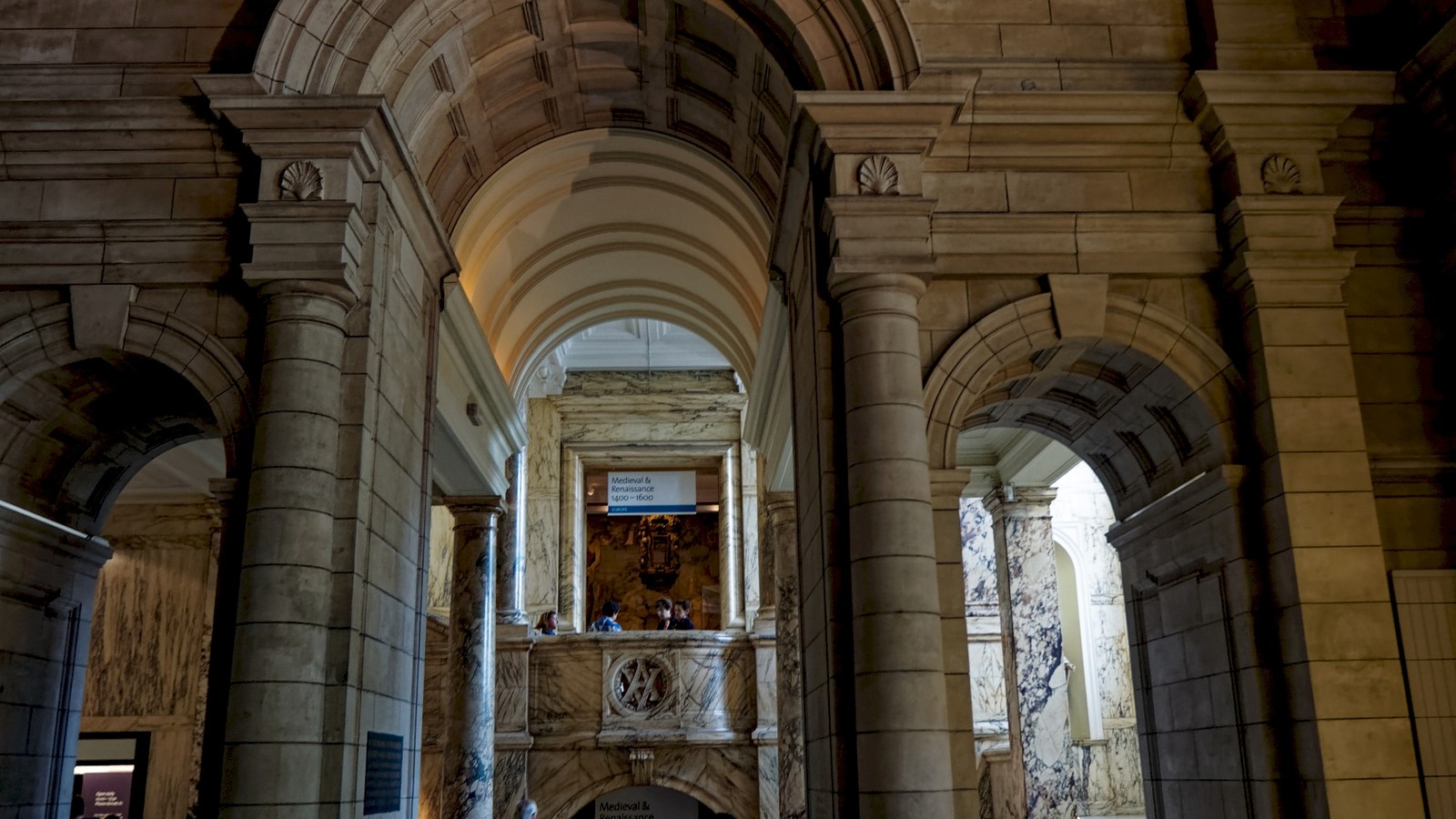
London Design Festival ran from Sept. 12 to 20, and Dezeen's editors called its program "one of the strongest we've seen since the pandemic." With the festival over, a few of its projects are worth revisiting for what they say about where design is heading: toward craft, reuse, sound and an uneasy conversation with artificial intelligence. This recap draws on Dezeen's list of 14 events to see.
A landmark built from police shields
The festival's Landmark Project was The Pangolin Shield on Strand Aldwych, by the architecture practice Studio Saar and the engineering firm Atelier One. It is a bamboo pavilion inspired by the pangolin, described by Dezeen as the world's most trafficked mammal. The structure is clad in traditional Indian bamboo police shields and in palm-leaf rain covers known as knups.
Dezeen says the project "transforms symbols of authority into a communal space for reflection" while examining colonial legacies and ecological exploitation. The pavilion was on view through Sept. 20.
Design meets AI at the V&A
At the Victoria and Albert Museum, the Awakenings program put artificial intelligence at the center. As part of this year's Emerging Design Commission, Playfool presented a game about human labor in the age of AI, and Nina Davies showed an installation about how bodies are starting to mimic AI-generated movement. Aziza Kaydri's Sender Unknown took a more optimistic view, combining Uzbek embroidery techniques with a bespoke AI model.
The related Craft x Tech show pairs Japanese craftspeople with international designers to reinterpret traditional techniques. This year's cohort includes Philippe Malouin and Bethan Laura Wood. Dezeen lists the V&A programming as running Sept. 12 to Oct. 18, which would make Oct. 18 its final day if the dates held.
Sound as a design medium
The Art of Sound opened the Wapping Hydraulic Power Station to the public for the first time in 13 years, according to Dezeen. The French manufacturer L-Acoustics created a system of 12 speakers for the 1890 industrial building, which hosted a sound installation by the computational biologist Max Cooper and an auditory journey down the Humber estuary by the sound recordist Chris Watson. It ran Sept. 11 to 15.
Design for the young and the unsponsored
Several of Dezeen's picks centered on emerging designers. At Aram, the collective Design Everything turned the gallery into the typical flat of a young designer, populated entirely by objects from 102 emerging practitioners. The work was selected from an open call that drew more than 500 responses, and each piece answered a limitation of space, time, budget or access. That show ran Sept. 11 to Oct. 10.
At Hackney Downs Studios, the duo All Ears hosted Village Meeting, a group show of more than 30 makers from London's emerging collectible design scene. In Shoreditch, 2LG Studio's You Can Sit With Us returned for a fourth edition at Shoreditch Town Hall.
Materials and reuse
Material Matters, the festival's materials fair, moved to Shoreditch for its fifth edition, with more than 50 exhibitors showing natural, reclaimed and newly developed materials. Dezeen's highlights included furniture made from salvaged oak from a brutalist building in Holborn by Prima Materia, bacteria-grown tiles inspired by coral from the biotech company Biomason and a 3D-printed ceramic facade system by Phyta Biodesign meant to integrate wildlife habitats.
At Ham House in Richmond, graduates of Kingston University's MA Product and Furniture Design program showed work under the title Past Made Present, including a contemporary throne exploring colonial histories through reinterpreted Dutch marquetry.
Brands and icons
Commercial design had its own moments. The furniture brand SCP moved from Shoreditch to Clerkenwell and opened a five-storey townhouse with interiors by Nice Projects. Made launched a 23-piece collection drawing on the original interiors of the Barbican, with an installation at the Barbican Centre about how the estate's layouts and show-home interiors by the architect Miriam Howitt informed the range.
What it adds up to
Taken together, the picks point to three currents: a renewed interest in craft as a response to automation, a reckoning with colonial histories in objects and structures, and a growing number of young designers organizing their own shows rather than waiting for institutional space. Dezeen's own framing, that the festival brought "stalwarts" together with "a slew of self-organised shows from young and up-and-coming talent," supports the third point directly. The first two are our reading of the projects described.
What we could not confirm
This recap relies on Dezeen's preview, published on Sept. 3, before the festival opened, so it describes planned programs rather than visited ones. We did not verify attendance, whether every event ran as announced, or any sales. The V&A's closing date comes from the preview and should be checked with the museum.
FAQ
When was London Design Festival 2026?
Sept. 12 to 20, 2026.
What was the Landmark Project?
The Pangolin Shield, a bamboo pavilion by Studio Saar and Atelier One on Strand Aldwych.
Is anything still on view?
Dezeen lists V&A programming through Oct. 18; confirm with the museum.
Sources
*Cover photo: Txllxt TxllxT, Wikimedia Commons, *[*https://commons.wikimedia.org/wiki/File:London_-_Cromwell_Gardens_-_Victoria_&_Albert_Museum_1909_Aston_Webb_-_Entrance_Hall_-_View_East.jpg*](https://commons.wikimedia.org/wiki/File:London_-_Cromwell_Gardens_-_Victoria_&_Albert_Museum_1909_Aston_Webb_-_Entrance_Hall_-_View_East.jpg)* (CC BY-SA 4.0).*