Marlon James's The Disappearers: A Reading Guide
Marlon James's 640-page Booker finalist follows a 1988 mob attack in Kingston. What it is about, what critics say and what to know before reading.
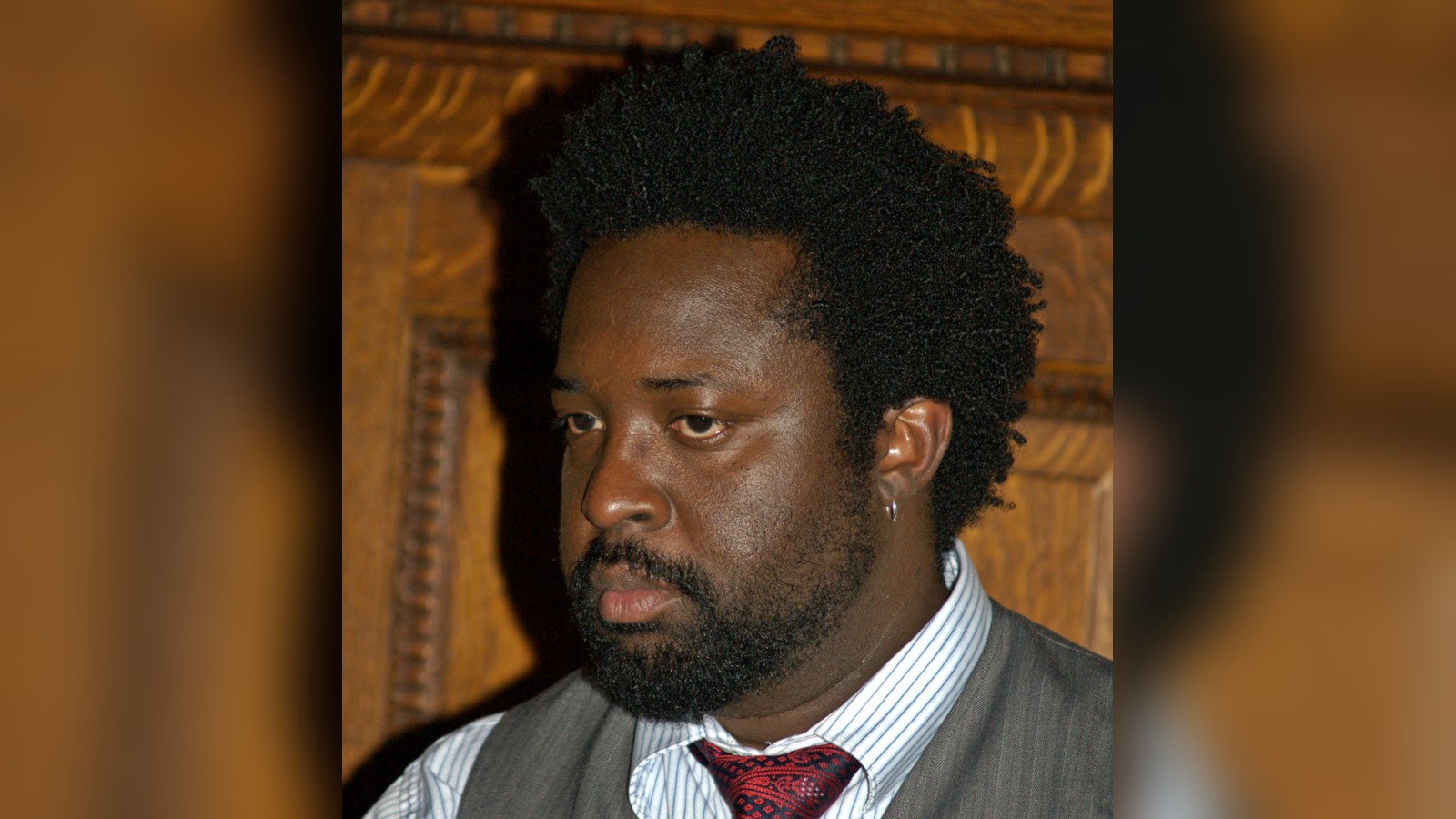
Marlon James's new novel is long, loud, harrowing and, by most accounts, extraordinary. The Disappearers, a 640-page book published on Sept. 1 by Riverhead, has since been shortlisted for the 2026 Booker Prize, whose winner will be announced on Nov. 9. This guide explains what the book is about, how critics have received it and what to know before you start.
What happens
The novel is set in Kingston, Jamaica, and turns on a June night in 1988. Eight gay men gather at a house to rehearse John Herbert's prison play Fortune and Men's Eyes. A mob attacks them. The Guardian's reviewer, Yagnishsing Dawoor, writes that all but one of the men are injured and that two later vanish without a trace. Kirkus identifies the title's "disappearers" as Orrin Turner and Matt Chin, who dominate the book without being seen or heard for most of it.
Roughly six years after the attack, according to Kirkus, two survivors, Jordan Brown and Eddy Porteous, team up to look for their missing friends. Their search through bars and gathering places becomes a portrait of Kingston's gay community during the early years of the AIDS crisis and of the homophobia that produced the attack.
How it is built
James tells the story through interview transcripts, diary entries and letters. Kirkus notes that the attack itself is rendered through "random, frantic voices." The Guardian adds that the narrative moves through "uptown, downtown, ghetto and gully" and makes excursions to 1950s England and, at the close, to the United States in the 2000s. The novel also places the perpetrators' minds on the page, a choice the Guardian's reviewer reads as ethical rather than gratuitous.
What critics say
Reception has been strong. Kirkus calls it "galvanizing" and says that even when it "stress-tests your senses," the book works as both detective story and social history. The Guardian calls it "a scorching exposé of homophobia in Jamaica" and praises prose that is "bitter and hilarious, lyrical, bawdy, pugnacious."
The Guardian review also lists reservations. The narrative "sags in places," its debts to Toni Morrison's Song of Solomon can "veer into self-conscious pastiche," and some pivotal events are reported rather than dramatized. Dawoor judges these "redeemable shortcomings."
The BBC reports that The New York Times described the novel as "a masterpiece, the novel of the decade and possibly of the century thus far." We could not retrieve the Times review itself, so that line is secondhand. Publishers Weekly says the book was published "to critical acclaim."
The Booker context
James won the Booker in 2015 for A Brief History of Seven Killings. This book marks his return to the prize. The judges, chaired by the classicist Mary Beard, called the book "a Jamaican epic from one of the most impactful Caribbean novelists" writing now and praised "the shifting register of the dialogue and poetic phrasings, often pierced through with sharp, double-edged humour." The Guardian reported before the shortlist that the judges had called the novel a "reckoning."
Five other books share the shortlist, including Douglas Stuart's John of John and Elizabeth Strout's The Things We Never Say. A one-line forecast is not possible, and the judges themselves described their deliberation as a "tussle."
Before you read
Be prepared for graphic violence. Kirkus describes the book's detail as "bountiful, often graphic," and the Guardian's review recounts scenes of brutal injury. James has been criticized in the past for glib relish in violence, the Guardian notes, though it argues that this novel shows "unequivocal ethical purposefulness." Readers sensitive to depictions of anti-gay violence, AIDS-era loss or sexual content should know the book does not look away.
The novel is also dense with Jamaican speech and with references to queer literature. The Guardian lists Gide, Genet, Vidal, Wilde, Baldwin and Holleran among the "visiting spectres," and cites John Rechy's 1977 book The Sexual Outlaw as a favorite of one character. You do not need to know these works, but they reward the curious.
Where to start in James's work
If you are new to him, the Guardian places this book in a line that includes The Book of Night Women and the ongoing Dark Star fantasy trilogy. Kirkus compares the Dickensian sweep of his fantasy novels to the approach here. Of the earlier books, A Brief History of Seven Killings is the natural companion because it also reconstructs a violent episode in Jamaican history through many voices.
What we could not confirm
We have not read the book in full. We could not verify the New York Times quote, sales figures or the book's US reception beyond the reviews cited.
FAQ
What is The Disappearers about?
A 1988 mob attack on eight gay men rehearsing a play in Kingston, and the search for two who later vanished.
Is it on the Booker shortlist?
Yes. The 2026 winner will be announced on Nov. 9.
Does it contain graphic content?
Yes. Reviewers describe graphic violence and frank sexual content.
Sources
*Cover photo: David Shankbone, Wikimedia Commons, *[*https://commons.wikimedia.org/wiki/File:Marlon_James_BBF_2010_Shankbone.jpg*](https://commons.wikimedia.org/wiki/File:Marlon_James_BBF_2010_Shankbone.jpg)* (CC BY 3.0).*