Krasner and Pollock at the Met: Krasner Leads
The Met's new show gives Lee Krasner the lead, with 74 of her works beside 48 by Pollock. What curators and critics say, and how to plan a visit.
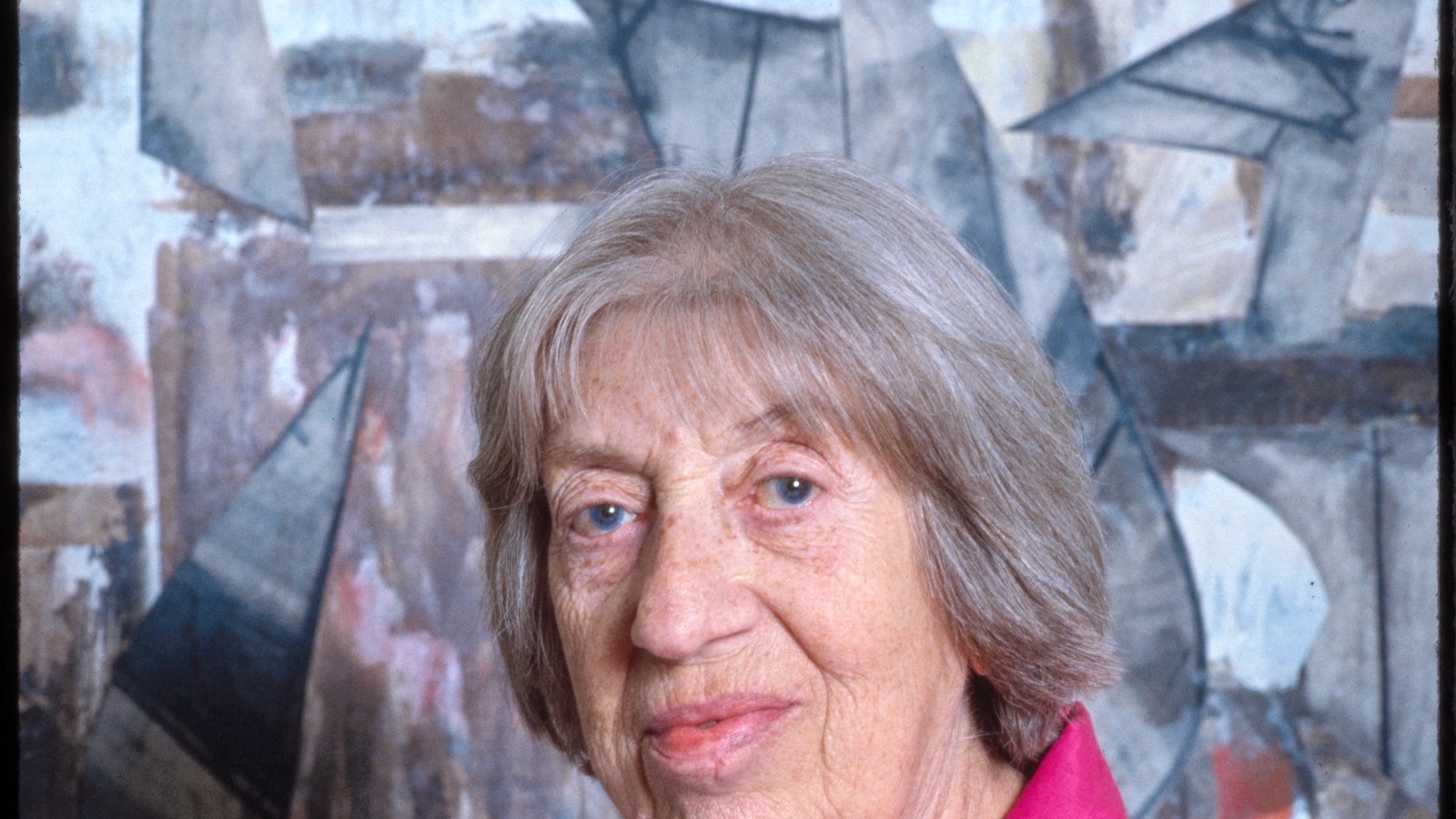
For decades, the story of Jackson Pollock and Lee Krasner has been told with Pollock in front. The Metropolitan Museum of Art's new exhibition, Krasner and Pollock: Past Continuous, on view from Oct. 4 through Jan. 31, 2027, reverses the order of billing in the title and in the galleries. NPR counts more than 120 works: 74 by Krasner and 48 by Pollock. Both reviews we read agree that the museum has built something unusual. They differ on what to feel about it.
The premise: a marriage, a studio, two careers
The Met's curators, Brinda Kumar and David Breslin, place the couple's work side by side. NPR's Anastasia Tsioulcas reports that the show is "replete with Pollock's greatest hits," the paint-splashed canvases that made him famous, but that it also "reveals Krasner as an Abstract Expressionist titan, too." Kumar said Krasner used collage "at these crucial moments in her life," sometimes "tearing up older bodies of work to create a new chapter."
The clearest example is Bald Eagle (1955), a collage in browns, blacks, fuchsia and orange. Kumar told NPR that Krasner "very intentionally and deliberately" cut up discarded Pollock works from the 1950s, and the artist's drip is still visible in the pieces. Breslin called the pairing a metaphor for couples: "You form a unit, yet you also have all the things in your head, in your mind, in your heart that are your own."
How the Met installed it
The installation is a story in itself. Pollock's 1952 painting Convergence, with its neon orange and electric yellow, stands on a freestanding wall near windows so daylight reaches it, according to NPR, which says the effect evokes a contemporary gallery. Autumn Rhythm (Number 30) is also moved off its usual wall onto a freestanding display against slate gray, which Kumar called "almost architectural."
Hyperallergic's Lucy Ives goes further, calling it "by any reckoning one of the most gorgeously designed and ingeniously installed exhibitions in the museum's history." She also warns that the galleries are "mostly windowless" and tucked into a "somewhat hard-to-access section" of the second floor, and that Saturday afternoon crowds can make a Met visit feel "more like a punishment than a brush with transcendence." That is one critic's weekend experience, but it argues for a weekday visit.
Krasner's own path
NPR gives a compact biography. Krasner was born Lena Krassner in Brooklyn to Orthodox Jewish parents from a shtetl in what is now Ukraine. She gave herself a series of new names, first Lenore and then Lee Krasner, and became a networker who knew everybody in New York's art scene. Writer Mary Gabriel, author of Ninth Street Women, says Krasner kept changing: "Every few years, she tries something new."
In a 1978 interview, asked what she was doing while Pollock grew famous, Krasner replied, "I was working all the time." The couple lived in Springs, on Long Island's far side. According to NPR, Krasner chose the location to pull Pollock away from the business and drinking of Manhattan. He used a barn for his large canvases while she painted in the kitchen and then in a small upstairs bedroom.
After 1956
Pollock died in a car crash in 1956. NPR notes that he was struggling with alcoholism and depression and that his girlfriend at the time was one of the passengers. Hyperallergic names a passenger, Edith Metzger, who did not survive the crash on Aug. 11, 1956. Krasner then took over the barn studio and made large works. The Seasons (1957), which NPR says is almost 17 feet wide and now belongs to the Whitney Museum of American Art, is the show's example of "some of the brightest, most vibrant paintings the year after his death," in Breslin's words.
NPR also reports that Krasner was savvy about money. After Pollock's death she more than tripled the price of Autumn Rhythm (Number 30) to sell it to the Met, a sum that set the pace for his market value and for modern artists more broadly.
Two different reviews
The two outlets do not read the show the same way. NPR frames it as Krasner "finally getting her due" on her own terms. Hyperallergic's Ives is more ambivalent, writing that visitors come "to stare at somebody else's marriage," and noting a visitor's cruel remark about Krasner's looks overheard in the entry hall. We could read only the opening of Hyperallergic's review, so we do not summarize the rest.
Visiting
We could not verify ticket pricing, timed-entry rules or hours, so check the museum's website before you go. Works we can confirm are on view from the sources include Krasner's Combat (1965), Re-Echo (1957), Mosaic Table (1947) and The Seasons (1957).
FAQ
When is Krasner and Pollock: Past Continuous on view?
Oct. 4, 2026, through Jan. 31, 2027, at the Metropolitan Museum of Art.
How many works are in the show?
More than 120, with 74 by Krasner and 48 by Pollock, according to NPR.
Who curated it?
Brinda Kumar and David Breslin are named as Met curators in NPR's report.
Sources
*Cover photo: Bernard Gotfryd (Library of Congress), Wikimedia Commons, *[*https://commons.wikimedia.org/wiki/File:Lee_Krasner,_artist.jpg*](https://commons.wikimedia.org/wiki/File:Lee_Krasner,_artist.jpg)* (Public domain).*