Fady Joudah's Exhibit G: Poems and Photographs
Fady Joudah's Exhibit G, a National Book Award poetry finalist, mixes poems, essays and photographs. What it holds, how reviewers read it and the field.
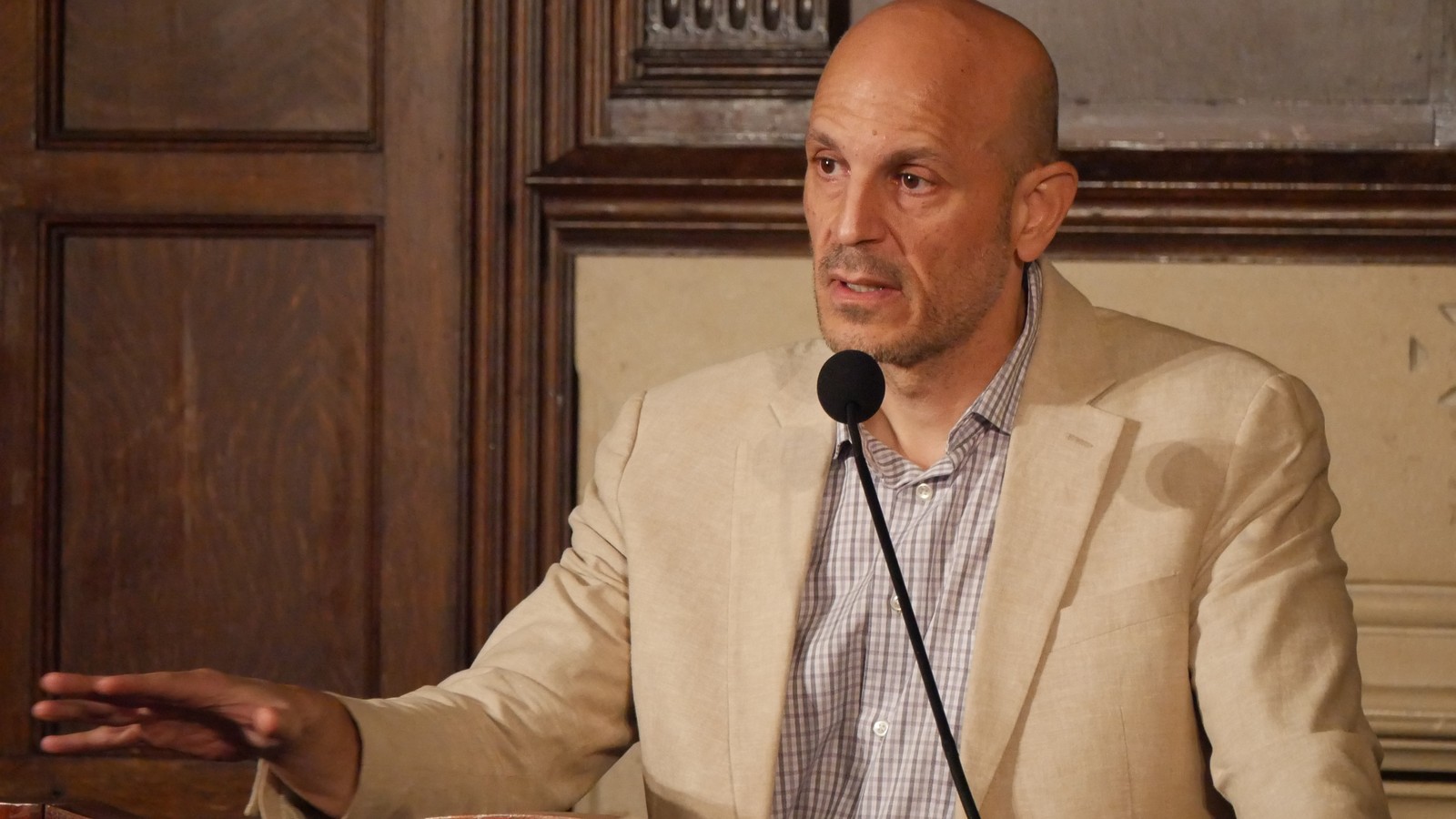
Fady Joudah's Exhibit G: Poems, Essays, and Photographs of Gaza is a finalist for the 2026 National Book Award in poetry, one of five books in the category. Milkweed Editions published the 208-page book on Sept. 22. Joudah, a Palestinian American physician and poet, has made a book that mixes verse, prose and pictures. Winners will be announced Nov. 18.
What the book is
Milkweed calls the book a collection that offers a Palestinian representation of grief, resilience and what it terms the life force of a people enduring genocide. The publisher's description says Joudah writes from the split perspective of a physician who cares for the sick in the United States while watching the destruction of Gaza from afar. It quotes him: by claiming what is being actively erased, he becomes presence. The word genocide is the publisher's and the reviewers' language, and we attribute it to them.
The book includes photographs, most of them from the Gaza Soup Kitchen, a Palestinian-led humanitarian effort that the Markaz Review says was established in 2024 to counter famine. It also includes Joudah's translations of two Palestinian writers from Gaza, Rawan Hussien and Nima Hasan, and one poem co-written with Hasan.
How reviewers read it
In the Los Angeles Review of Books, the poet and critic Christian Wessels says the collection continues Joudah's resistance to the idiom of the unspeakable. He points to a refrain, the gods have spoken, the gods said nothing, and to a poem that adapts Martin Niemöller's First They Came into a line that begins, I was a child, and they ate my heart. Wessels also stresses the photographs: children in tents, a boy in a Spider-Man shirt, another in a Nirvana T-shirt. Together, he writes, poem and image transcend reportage.
The Markaz Review's Issam Zineh reads it differently, as a turn of the archive from a repository of loss into a site of intimacy and memory. He says Joudah avoids spectacle in his choice of images and does not seek to humanize Palestinians in the usual ways, instead refusing the idea that Palestinians must audition for a part in humanity. He calls the translations a form of custodianship over interrupted authorship, since Hussien and Hasan did not finish the texts.
The finalists around it
The poetry finalists are Victoria Chang for Tree of Knowledge, Carolina Ebeid for Hide, Brenda Hillman for Still House in the Desert, Fady Joudah for Exhibit G and Susan Stewart for Bramble. The National Book Foundation says the finalists were chosen by independent judges from longlists announced in September with The New Yorker. Across all five categories, 14 authors and translators have been honored by the foundation before, according to Publishing Perspectives. We could not tell from our sources which of those 14 are in poetry.
What readers will find
Readers should expect a hybrid object rather than a standard poetry collection. Poems appear with prose pieces, among them essays the reviewers name, such as Another Palestine in Arabic and Exhibit G: Baby Moses and Khalas or Notes on Palestinian Interiority. Photographs sit between the texts. Both reviewers describe a book that holds grief alongside play, food, parenting and humor, and both quote its opening lines about turning love into art. The publisher cites endorsements from Omar El Akkad and Robin D. G. Kelley, and names the book a Millions most anticipated selection.
Why it matters
The finalist slot puts a book with an explicit political position, and a documentary visual component, inside the country's most visible literary prize cycle. The ceremony, hosted by Kyle MacLachlan, will be streamed, per the National Book Foundation, and registration for the livestream is open. The foundation datelines its announcements in New York, which is why we cover the cycle.
What we could not confirm
We have not read the book in full and rely on the publisher and two reviews. We could not verify the photographers' names or the number of photographs. The Markaz Review's date for the soup kitchen comes from that review alone. We did not confirm where the ceremony will be held. The cover photograph was taken at a Lannan Center reading and is not from the book.
FAQ
When was Exhibit G published?
Milkweed Editions published it on Sept. 22, 2026.
Is it a National Book Award finalist?
Yes, in poetry. The winner will be announced Nov. 18.
What is in the book?
Poems, essays and photographs, plus translations of two Gaza poets.
Sources
*Cover photo: Sizzlipedia, Wikimedia Commons, *[*https://commons.wikimedia.org/wiki/File:Fady_Joudah_1130790_01.jpg*](https://commons.wikimedia.org/wiki/File:Fady_Joudah_1130790_01.jpg)* (CC BY-SA 4.0).*