Luiselli's Beginning Middle End: A Reading Guide
Valeria Luiselli's Beginning Middle End is a National Book Award fiction finalist. Plot, how Kirkus and the Guardian differ, and who should read it first.
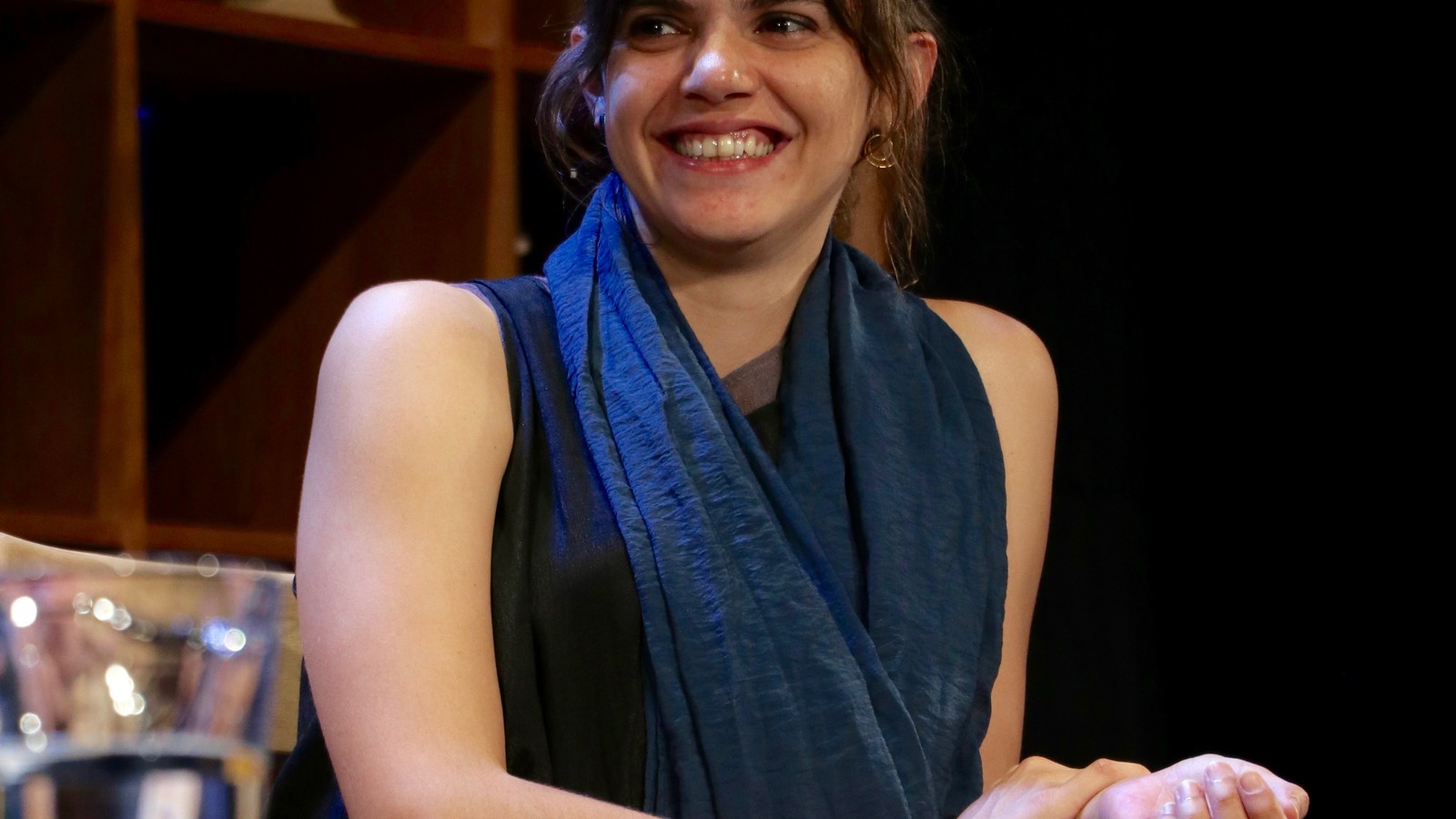
Valeria Luiselli's fourth novel, Beginning Middle End, is one of five fiction finalists for the 2026 National Book Award. The winners will be announced Nov. 18 at the 77th National Book Awards Ceremony and Benefit Dinner, hosted by Kyle MacLachlan. Knopf published the book on July 28. This guide explains what happens in it, how critics have reacted and who might enjoy it.
The setup
Kirkus describes a divorced writer, Ella Camposanto, who travels to Sicily with her 12-year-old daughter, Manuela, while she works on a novel. Early on, Manuela asks whether her mother's next book could have a straightforward beginning, middle and end. The title answers that dare.
In the Guardian's account, the narrator is a Mexican woman living in the United States who begins with a European book tour. She has a coil removed in Munich, her daughter loses a tooth in Prague and, near Amsterdam, they watch children learn to swim with their shoes on in case of floods. In summer they fly to Catania and stay in the apartment of a pianist who is away on tour.
The plot, such as it is
The book has a quest at its center. Before the trip, the narrator's mother gives her a valuable heirloom, a Roman mosaic tile of the god Proteus, which the narrator's grandmother took from an excavation site before leaving Sicily. Manuela becomes obsessed with returning it to the ruined villa it came from. Meanwhile, per both reviews, Mount Etna is erupting and wildfires burn.
Kirkus notes that Proteus, the shape-shifting sea god, is a key figure, along with Ovid's Metamorphoses and Pliny the Elder's writing about weather and the eruption of Vesuvius. The Guardian adds that mother and daughter discuss Proteus in the Odyssey, and that their exploration of myth becomes a central strand.
How critics split
Both reviews admire the book and then diverge. Kirkus calls it an offbeat migration story as piercing and artful as any in Luiselli's work, and says the drama is relatively minor but the story feels like it has the force of centuries behind it. It reads the book as another statement of her great theme, displacement, and as an argument that migration is a prompt to rethink identity and relationships.
The Guardian's Chris Power is cooler. He says the novel has trouble gathering momentum, or perhaps is not interested in doing so, and that the writing is increasingly inward-looking even as its subjects, motherhood, migration and the climate crisis, are universal and urgent. He compares the form to the tesserae in the mosaic: small segments from which a face emerges. He also notes that the narrator keeps questioning whether she is writing a novel or an essay, and that the identity crisis is resolved only when the daughter takes control of the narrative.
Where it sits in her work
Luiselli began in 2010 as an essayist with Sidewalks, and her earlier books, Faces in the Crowd, The Story of My Teeth and Lost Children Archive, each play with form, per the Guardian. The review says Beginning Middle End mirrors Lost Children Archive, which was itself an expansion of her 2017 essay about undocumented migrant children, Tell Me How It Ends. In both novels, short titled chapters favor essayistic thought over dramatic scenes, and children come into possession of Polaroid cameras.
Why it matters
The National Book Foundation says it received 1,912 submissions this year, 451 of them in fiction, and that 25 judges read nearly 2,000 books. Luiselli is a recognizable name on that list, alongside Edwidge Danticat, Hannah Lillith Assadi, Julián Delgado Lopera and Morgan Thomas. The foundation datelines its announcement in New York, which is the local hook for our readers, though we did not confirm the venue.
Who it is for
Readers who liked Lost Children Archive will find familiar terrain. Readers who want a tightly plotted page-turner should read the Guardian's caution first. The book is a mother-daughter story, a myth story and a meditation on how stories are built, in roughly that order of prominence, according to the reviews we read.
What we could not confirm
We have not read the novel and rely on two reviews, so plot details may omit twists, and the Guardian review withholds one on purpose. We did not check the Atlantic, Columbia Magazine or Chicago Review of Books reviews in full. The ceremony venue is not stated in the sources we read. The award results are not known, and any prediction would be speculation. The cover photograph was taken at the Hay Festival in 2016.
FAQ
When is the National Book Awards ceremony?
Wednesday, Nov. 18, 2026.
What is the book about?
A writer and her 12-year-old daughter travel to Sicily and try to return a stolen Roman mosaic of Proteus while Mount Etna erupts.
Is it a follow-up to Lost Children Archive?
The Guardian says it mirrors that novel in structure and themes, but it is a separate story.
Sources
*Cover photo: Andrew Lih (User:Fuzheado), Wikimedia Commons, *[*https://commons.wikimedia.org/wiki/File:Hayfestival-2016-Valeria-Luiselli-stage.jpg*](https://commons.wikimedia.org/wiki/File:Hayfestival-2016-Valeria-Luiselli-stage.jpg)* (CC BY-SA 3.0).*