Snøhetta's Shanghai Opera House Opens With a Rooftop Stage
Snøhetta's Shanghai Grand Opera House opened Oct. 17 with a spiral stair to a public roof. The design, the first season, ABT's November visit and caveats.
The Shanghai Grand Opera House, designed by the international studio Snøhetta with the state-owned East China Architectural Design and Research Institute, opened on the Huangpu River on Oct. 17, 2026. China Daily reports that the opening concert doubled as the launch of the 25th China Shanghai International Arts Festival. For New Yorkers, the building has a local thread: the studio that drew it also remade Times Square, and American Ballet Theatre is booked to close the festival on its stage in November.
A building you can walk over
The defining feature is a giant spiral staircase that cantilevers dramatically at its peak, Dezeen reports, and was meant to evoke an unfolding fan, a dancer or a set of piano keys. The Pudong district government describes the structure as a flowing white double helix shaped like a Chinese fan. The stair leads to a public rooftop that can serve as a stage, an observation deck or simply a place to meet.
Kjetil Thorsen, who founded Snøhetta with Craig Dykers in 1989, told Dezeen that the roof was central to making the building part of the city. "Buildings like opera houses inevitably create thresholds through walls, doors, and ticketed programs. We see it as our responsibility to challenge those thresholds and make the building as much a civic destination as a performance venue," he said. He added that people "should be able to enjoy the building without attending a performance."
Thorsen compared the project to Snøhetta's Oslo Opera House, saying both designs try to "reduce thresholds wherever possible." He told Dezeen that the studio begins every job by studying its context, and recalled a Chinese architecture student asking how a foreign firm had made a building that felt so Chinese. "The answer lies in observation and understanding context," he said.
Inside the halls
Dezeen puts the complex at 146,786 square meters, or roughly 1.58 million square feet, with three auditoriums that together seat 4,200 people. The main room, Harmony Hall, has 2,000 seats on five levels and deep red surfaces meant to feel carved from a single block. The Soar Theatre seats 1,200, and a third, 1,000-seat hall has adaptable seating and staging for experimental work behind a large glass wall facing the river.
The Pudong government's June announcement counts four performance spaces, adding an Open Stage and a Grand Atelier, and says Harmony Hall's stage covers 3,500 square meters, about 37,700 square feet. The same report says the structure uses 165 MPa ultra-high-performance concrete, rarely used in buildings, to achieve its long cantilevers, and that the engineering has drawn awards from the International Federation for Structural Concrete and the American Concrete Institute.
Snøhetta won the international competition in 2016 and developed the design with ECADI, the theater consultant Theatre Projects and Nagata Acoustics, according to Dezeen. Thorsen said cutting the carbon footprint was hard given the building's scale, and pointed to a reflective roof, cross-ventilation through the lobby, durable materials and a close link to public transit.
The New York connection
Snøhetta runs a studio on Washington Street in Brooklyn, and its New York portfolio is hard to miss. The firm's Times Square reconstruction, finished in 2017, created 2.5 acres of pedestrian-only space between 42nd and 47th Streets, according to the studio, which credits the redesign with a 40 percent drop in pedestrian injuries. Snøhetta also designed the National September 11 Memorial Museum Pavilion, the 53,000-square-foot entry building completed in 2014, according to its project page. Dezeen notes that its other recent cultural work includes the Theodore Roosevelt Presidential Library in North Dakota.
The new house will also host a New York company soon. American Ballet Theatre lists Swan Lake at the Shanghai Grand Opera House for Nov. 12 to 15, 2026, after dates at the Guangzhou Opera House Nov. 5 to 7. The festival lists the production, choreographed by former artistic director Kevin McKenzie after Petipa and Ivanov, as its closing performance, with tickets from 180 to 1,280 yuan.
The opening season
The opening concert, Shanghai Grand Opera House and Friends, was billed to feature conductors Zhang Guoyong, Long Yu and Xu Zhong, the Shanghai Symphony Orchestra and singers including Juan Diego Flórez and Siobhan Stagg, according to the festival's listing. The announced program ran from Mozart, Verdi and Puccini to Chinese works such as The Long March and Daughter of the Party.
The Shanghai government's English portal lists the rest of the first season. Teatro La Fenice brings a 1950s-set Tosca on Oct. 22 and 24. Valery Gergiev leads the Mariinsky Orchestra in all 15 Shostakovich symphonies from Oct. 23 to 28. The Mariinsky Theatre follows with Aida on Oct. 30 and 31 and Nov. 1, and the Staatsoper Unter den Linden performs Der Rosenkavalier under Christian Thielemann on Nov. 8, 10 and 12. Opera tickets run 80 to 1,280 yuan, which the portal converts to about $12 to $190.
What we could not confirm
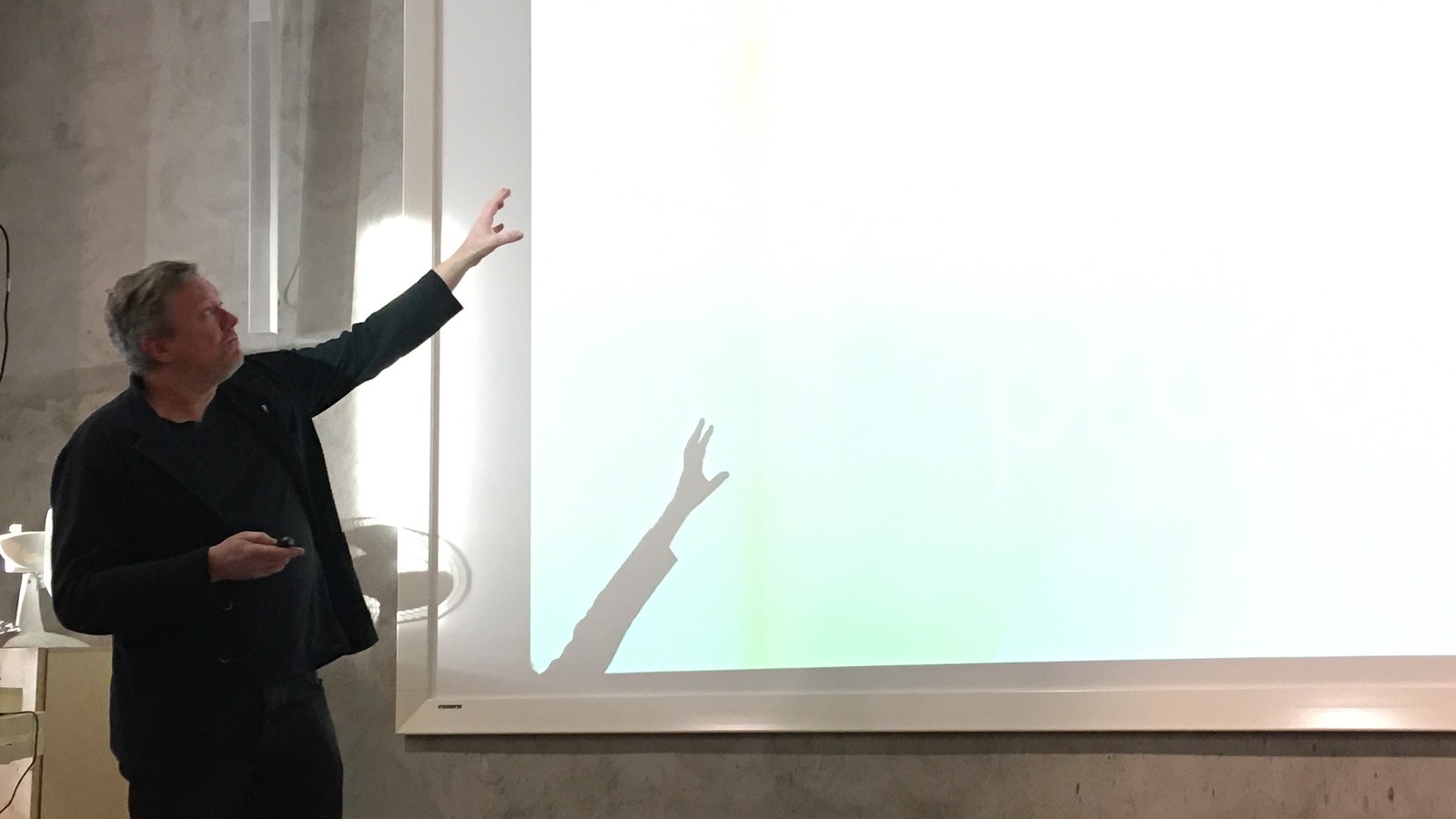
We have not visited the building. Size and seat figures come from Dezeen and the Pudong government, and the two sources describe the venues differently: three auditoriums in one account, four performance spaces in the other. We did not find a published construction cost. We could not confirm that the opening concert ran exactly as the festival listed it, and we have not seen reviews of the first performances. The cover photograph shows Thorsen at a workshop in Oslo in January 2020, according to its Commons caption, and is not from the Shanghai opening.
FAQ
When did the Shanghai Grand Opera House open?
It opened on Oct. 17, 2026, with the opening concert of the 25th China Shanghai International Arts Festival, per China Daily.
Who designed it?
Snøhetta, with ECADI, Theatre Projects and Nagata Acoustics, according to Dezeen.
Can you visit without a ticket?
Snøhetta designed the rooftop to be publicly accessible, Dezeen reports.
Sources
Cover photo: Fawaz.tairou, Wikimedia Commons, [https://commons.wikimedia.org/wiki/File:Kjetil_Thorsen_showing_Snøhetta.jpg](https://commons.wikimedia.org/wiki/File:Kjetil_Thorsen_showing_Snøhetta.jpg) (CC BY-SA 4.0).