Barbara Kingsolver's Partita: Music, Grief and Class
Barbara Kingsolver's Partita, her first novel since Demon Copperhead, follows a Tennessee piano prodigy. The story, the reviews and her tour.
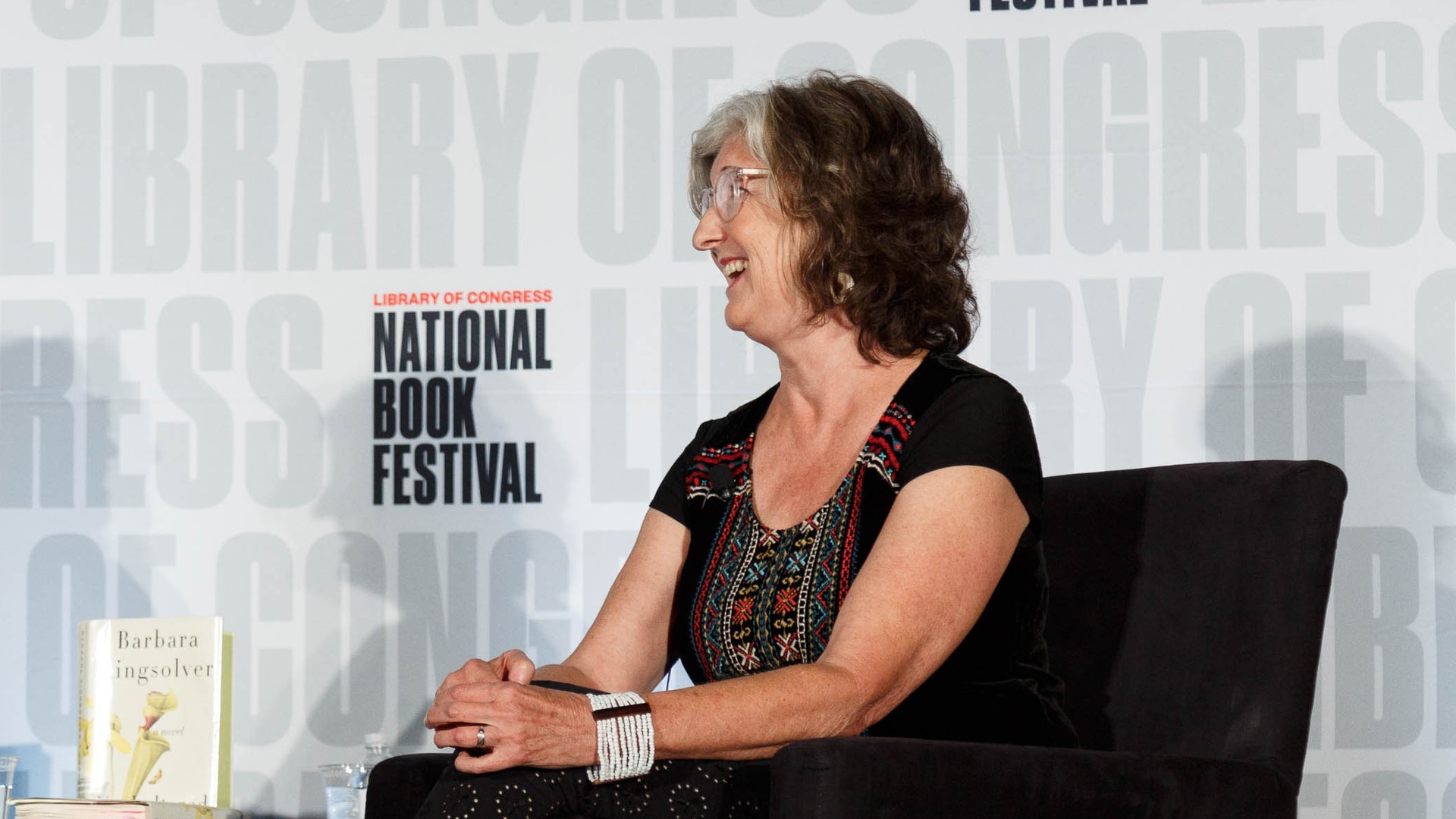
Barbara Kingsolver's first novel since the Pulitzer Prize-winning Demon Copperhead is a love story about a pianist, and it has quickly found its way onto the bestseller lists. Partita came out from Harper on Oct. 6, and Publishers Weekly reported in its Oct. 19 bestseller roundup that the novel ranked No. 5 on its hardcover fiction list. Jenna Bush Hager also chose it as her Read with Jenna book club pick for October, Today reported, calling Kingsolver an author on her "Mt. Rushmore of writers."
The book reaches readers in the middle of a national tour that started in Manhattan and returns to New York later this month. Here is what the novel is about, what Kingsolver has said about writing it and how critics have received it.
What Partita Is About
The novel follows Livia, a piano prodigy from a dairy farm in rural east Tennessee. According to the review in Kirkus, her brother Cyrus died by suicide when she was 11. Kingsolver told NPR that readers learn this "literally in the first sentence." Music became her way out: a scholarship took her to the Indiana University School of Music, where she met Sigurd, a labor organizer whom Kirkus describes as the man she "loved and lost to 'the revolution.'"
In the present day, Livia is married to a farmer, Charlie, and teaches piano in the same farm country where she grew up. A phone call from Sigurd, after more than 20 years of silence, pulls her back into the past. Kirkus notes that her right hand was crushed in an accident that ended her concert career, and The Guardian's Lara Feigel writes that Sigurd "played a part in this." The recent death of Livia's mother, a hoarder who left behind a house full of junk, sets up the book's final revelations.
The title is a clue to its form. A partita is a musical composition made of several parts with different moods, and Kingsolver's website says Livia's memories are "framed as musical dances." NPR's Andrew Limbong noted that the sections carry names such as the preludes, the allemande and the toccata.
Kingsolver's Own Hands at the Keyboard
The novel draws on Kingsolver's life. She told NPR's Book of the Day podcast that she won a music scholarship and studied classical piano "really intensely for one year in college" before deciding she "was not going to be one of the 10 people in the United States who would make it as a concert pianist."
She also has Dupuytren's contracture, an inherited condition that, as NPR described it, forces the fingers to bend into a fist. "What it means for me is I have to have surgeries every few years to open my hands back up so that I can play the piano," she told NPR. Her hand doctor is thanked in the book's acknowledgments, and she said the novel deals with the frustration that follows both "career ending injuries" and "career limiting injuries."
Art, Class and Appalachia
Kingsolver told NPR she wanted to ask why art matters at a moment when, in her words, resources are being withdrawn "from the NEA all the way down to second grade music classes." She grew up in a small town in Kentucky and said she wanted to explore "why is it that a lot of us feel like the fine arts belong to fancy people in cities?"
That question links Partita to Demon Copperhead, her 2022 retelling of David Copperfield set in Appalachia during the early opioid crisis. Kingsolver has lived in the region for more than 20 years, and Publishers Weekly quoted her telling Cardinal News, "Every book I write will be about Appalachia." In the NPR interview she named Harriette Arnow, Robert Penn Warren, Bobbie Ann Mason and Wendell Berry as writers she is "standing on the shoulders of."
What the Critics Are Saying
Early reviews have been warm. Kirkus called the book "brilliant, affecting work from one of contemporary literature's masters" and praised its "beautifully paced and judged narrative." In BookPage, Sydney Hankin wrote that Kingsolver touches on "class differences, abortion access, political disengagement and education inequality" and is "forceful without ever being moralistic."
The Guardian's review was more mixed. Feigel called the sex writing "breathless, overwrought prose," and the review's subhead says it "threatens to throw the novel off-kilter." She also called Partita "a quieter book, slower to get going" than Demon Copperhead, but concluded that it is "a rich novel" that stayed with her long after she finished it.
Where to See Kingsolver on Tour
The tour began on Oct. 6 at Barnes & Noble Union Square, a sold-out conversation with Miwa Messer, followed by an Oct. 7 talk at Tarrytown Music Hall, according to the author's events page. New York readers have one more chance: Kingsolver appears with Amor Towles on Oct. 28 at St. Ann's Church in Brooklyn, presented by Books Are Magic, at 7 p.m.
Before then, the schedule lists stops in Pasadena, California, on Oct. 21, San Jose on Oct. 22, San Francisco on Oct. 23 and Dallas on Oct. 24. After Brooklyn, she goes to Pittsburgh on Oct. 29 and appears online with PBS Books on Nov. 5. Several dates, including Dallas, Pittsburgh and Raleigh, are already listed as sold out.
In the United Kingdom, Faber's announcement set publication for Oct. 8. Faber calls Kingsolver "the only double Women's Prize winner," and its announcement describes Partita as her eleventh novel.
Sources
Cover photo: Library of Congress Life, Wikimedia Commons, [https://commons.wikimedia.org/wiki/File:Barbara_Kingsolver_and_Mandalir_del_Barco_at_the_National_Book_Festival.jpg](https://commons.wikimedia.org/wiki/File:Barbara_Kingsolver_and_Mandalir_del_Barco_at_the_National_Book_Festival.jpg) (CC0).